












































 Sign In / Sign Up
What Are the Key Limitations of Traditional Camera Backpacks?
Traditional camera backpacks work well for basic transport, but in demanding outdoor and professional scenarios, several limitations become clear.
They are designed for transport, not for use
Insufficient structural protection
Many traditional camera backpacks rely mainly on padding and fabric for protection. While this may be adequate for light use, it often falls short in harsher outdoor environments or on active job sites.
Without a rigid structure, impact protection depends heavily on how the bag is packed, leaving equipment vulnerable when the backpack is dropped, compressed, or exposed to uneven forces.

Limited capacity for complex setups
Traditional camera backpacks are typically designed around standard photography kits. Once additional gear is introduced, such as external power banks, spare batteries, mounting accessories, cables, or work tools — space quickly becomes a constraint.
As setups grow more complex, users are forced to compromise: leaving gear behind, stacking items tightly, or overloading a single compartment.

Lack of true compartmentalization
In many traditional backpacks, different types of equipment end up sharing the same internal space.
Cameras, batteries, cables, mounts, and accessories are often stored together, increasing the risk of damage and making it harder to access specific items quickly. This lack of functional separation also makes on-site organization more difficult, especially when working under time pressure.

The backpack remains a passive container
Because traditional backpacks are built primarily as containers, the responsibility for organization and operation falls entirely on the user.
Traditional camera backpacks do not participate in the act of filming. They provide no structural support, do not help stabilize shooting positions, and cannot reduce the need for constant handling and adjustments. All decisions around stability, angles, and access efficiency are left entirely to the creator.
As a result, creators are not only carrying their equipment — they are actively managing it at every step. Over time, this adds mental overhead and slows down the overall workflow.

Round-Toe Chunky Heels
When protection, modularity, organization, power integration, and filming support are combined into a single system, the role of the backpack changes.
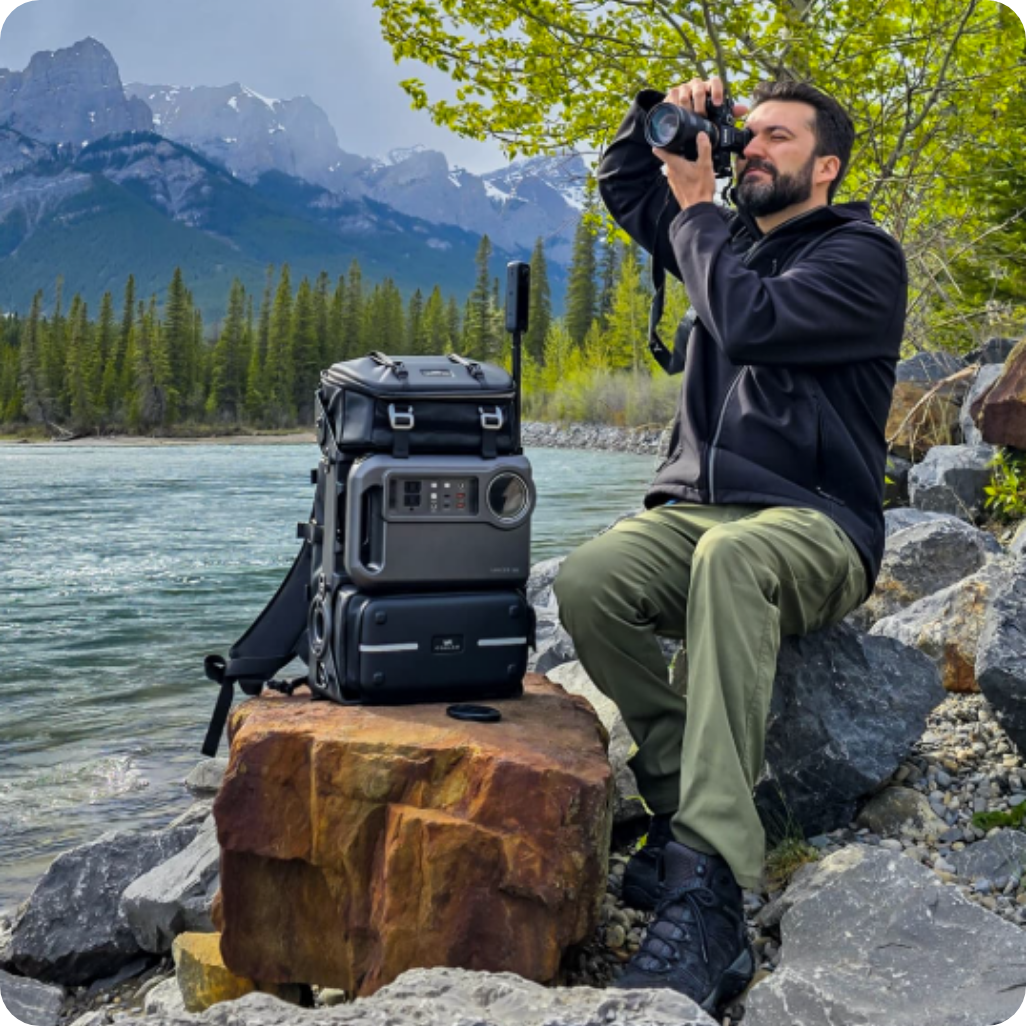
Lancer300 is not just a camera backpack.
It is a working system designed for continuous filming.Its goal is not to carry more gear, but to reduce interruptions, reduce manual management, and allow creators to stay focused on what they are doing.

How Lancer300 Addresses These Limitations
Lancer300 was not designed by adding features on top of a traditional camera backpack.
It was built by rethinking what a camera backpack should do in real-world use.
Each of the limitations mentioned above is addressed through deliberate structural and system-level decisions.

Structural protection instead of relying on padding
Traditional backpacks rely heavily on soft padding for protection, which offers limited resistance against impact and compression.
Lancer300 introduces an external exoskeleton structure. This structure is not only about strength, but about how force is distributed. When the backpack is dropped, compressed, or subjected to uneven pressure, impact is spread across the structure rather than transferred directly to the equipment inside.
For areas that require additional protection, such as the top section of the drone compartment, PC material is used to provide enhanced rigidity and impact resistance.

Modular design for complex and changing setups
As gear setups become more complex, Lancer300 does not attempt to force everything into a single space.
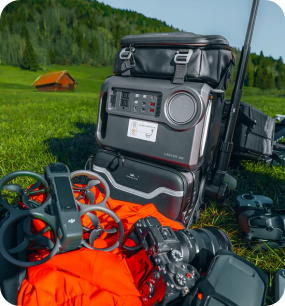
Instead, it adopts a modular design, where different types of equipment are placed into dedicated, independent modules. This prevents interference between devices and allows the system to adapt to different use cases.
Whether the setup changes between filming, travel, or field work, the backpack can be reconfigured accordingly, rather than forcing the user to compromise.

Functional compartmentalization, not mixed storage
In Lancer300, compartmentalization is not about aesthetics — it is driven by usage.
Cameras, power equipment, cables, and accessories each have defined spaces and boundaries. This reduces the risk of collision and damage, while also shortening access time.
In outdoor or professional environments where efficiency matters, this organization significantly lowers operational friction.

From passive container to active filming support
The most fundamental change in Lancer300 is that the backpack no longer remains a passive container.
Through its structural support and integrated Magic Arm, certain filming devices can be mounted directly onto the system. This reduces the need for constant handheld operation and repeated adjustments.
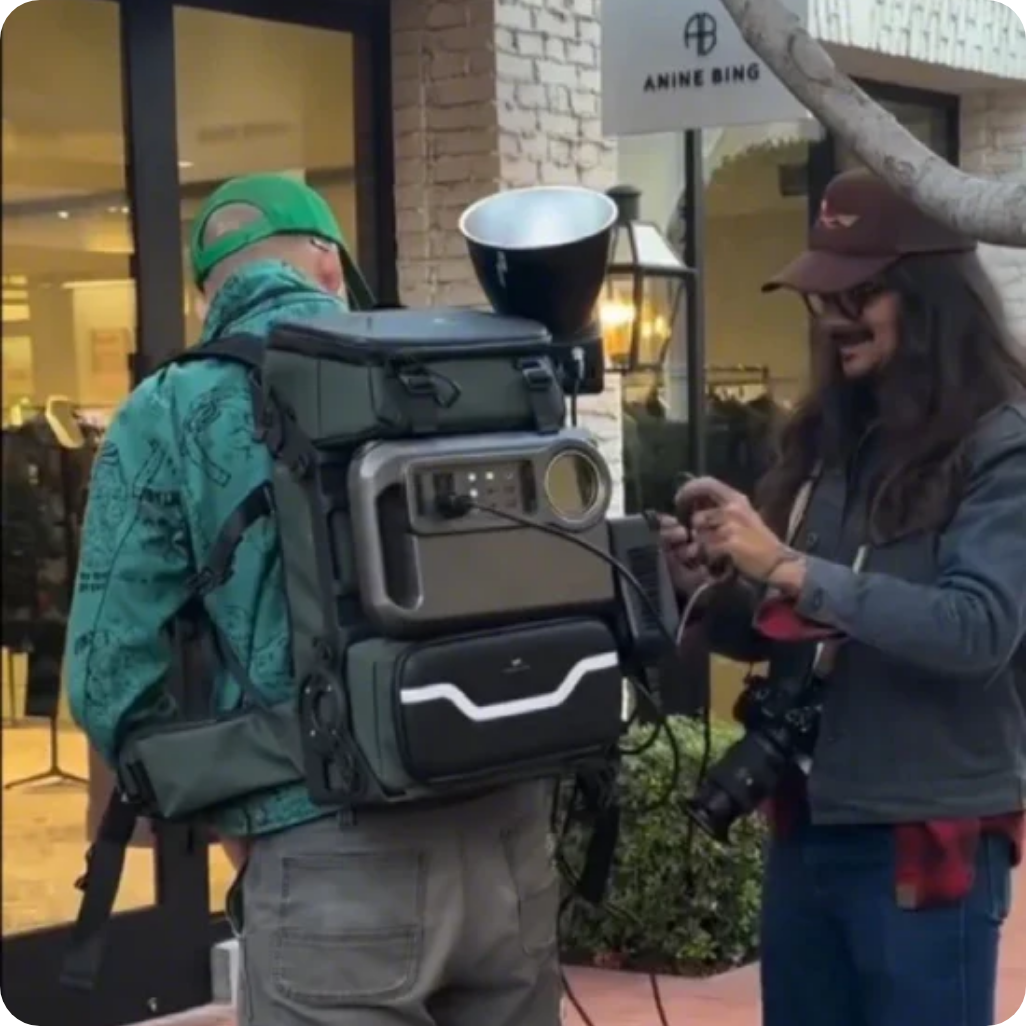
At the same time, the built-in power station allows cameras and accessories to stay powered directly from the backpack, removing the need to manage separate batteries or power banks during a shoot.
The backpack begins to assist with stability, power management, and shooting posture, rather than simply carrying equipment. As a result, decisions around angles, stability, access, and power are no longer handled entirely by the user.
From carrying equipment to supporting use
When protection, modularity, organization, power integration, and filming support are combined into a single system, the role of the backpack changes.
Lancer300 is not just a camera backpack. It is a working system designed for continuous filming.
Its goal is not to carry more gear, but to reduce interruptions, reduce manual management, and allow creators to stay focused on what they are doing.

